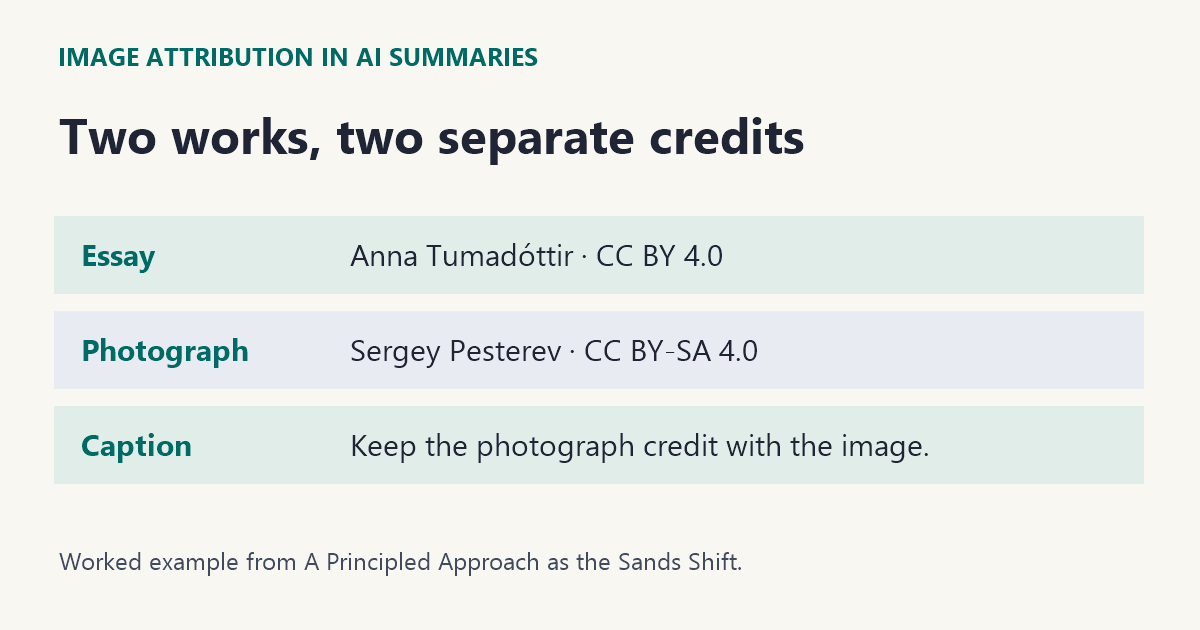
An editor preparing an AI-assisted summary has a small but consequential choice to make. If the article names its writer at the top and credits a photographer beneath the image, what goes into the social caption? A real example shows why image attribution in AI summaries deserves its own check.
On this page
One page contains two separately credited works
On 21 September 2026, Creative Commons published Anna Tumadóttir’s essay A Principled Approach as the Sands Shift. The essay discusses openness and how creators and knowledge communities can participate in decisions about AI. It is credited to Tumadóttir and published under CC BY 4.0.
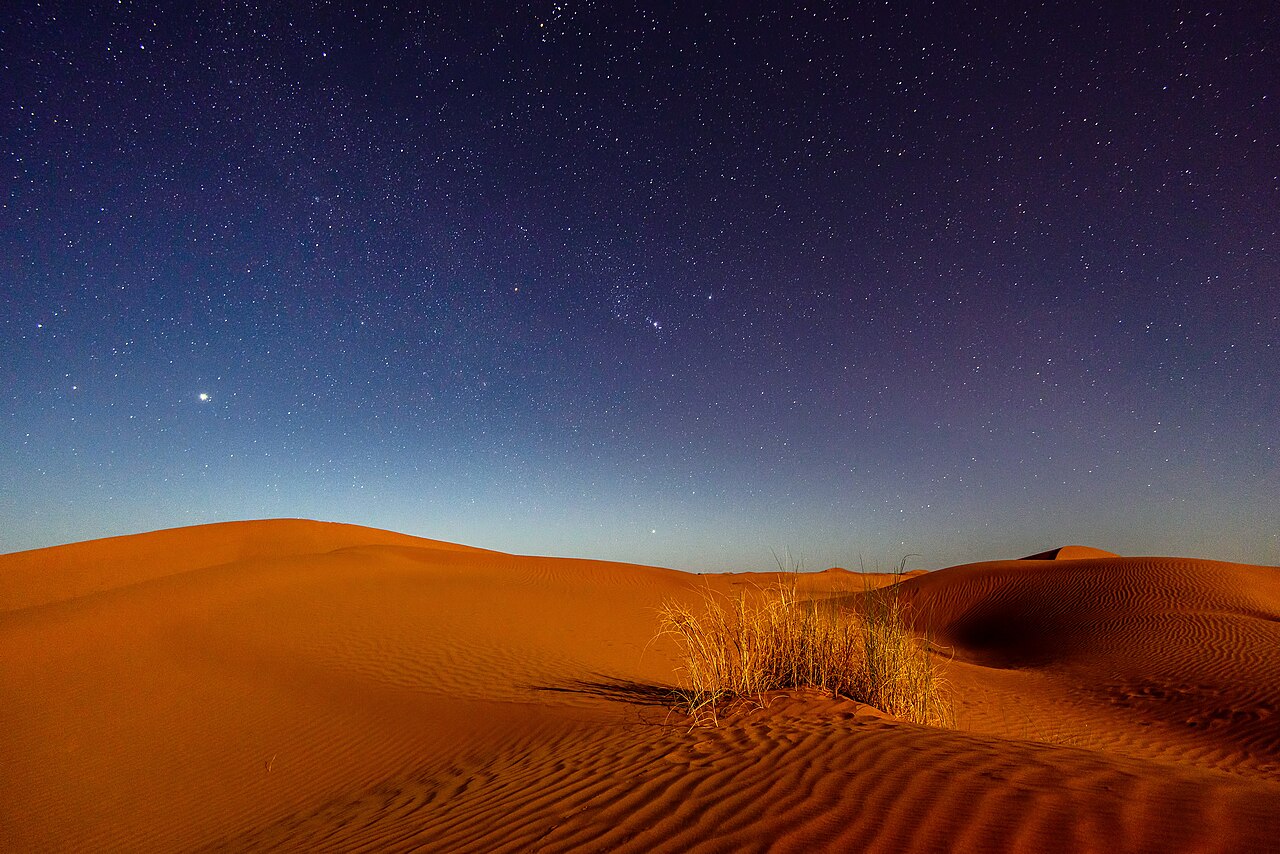
The photograph accompanying it has another name, creator and licence. Moonlight in the Sahara is by Sergey Pesterev. Its credit points to CC BY-SA 4.0. An assistant that simply takes the nearest byline and attaches it to every asset on the page would give Tumadóttir credit for a photograph made by Pesterev. Copying the article’s licence into the image record would introduce a second error, even if both names were correct.
Build an image attribution brief from two records
In this example, the useful unit for an editorial brief is the individual work. Put the records on separate lines before asking for a draft.
- Text: A Principled Approach as the Sands Shift — Anna Tumadóttir, Creative Commons, 21 September 2026. CC BY 4.0.
- Photo: Moonlight in the Sahara — Sergey Pesterev. CC BY-SA 4.0.
A short instruction can now be specific: “Summarise the essay in two sentences. Put the photograph credit on a separate line. If a creator or licence is missing, mark the field for review.” That last sentence matters in a real queue. A visibly incomplete record gives the editor something to resolve. A plausible name filled in from elsewhere on the page can slip through unnoticed.
Check image attribution in AI summaries after shortening
A full article offers room for a caption with links. A social post may show just a headline and an image after an editor trims the copy. If space is tight, shorten the description of the essay first. Keep the photographer’s name with the photograph and a path back to its full credit. For this particular image, a compact caption could read “Moonlight in the Sahara — Sergey Pesterev, CC BY-SA 4.0,” with the image and licence links retained wherever the format permits them.
Alt text serves a different reader. A visitor using a screen reader needs to know what the picture shows. Putting the licence string into that description while dropping it from the visible caption leaves both readers with less useful information. In the example above, the photograph’s title helps identify the scene, and the caption carries the linked attribution.
Read the finished card without the article
Look only at the social preview. Can someone tell who wrote the argument, who made the image and where to find the original works? Then open the article and check those answers against the source. That comparison catches a mistake that a polished paragraph, a correctly spelled name or a high SEO score can all conceal.
For the essay itself and the background to the discussion, read Fradiqueland’s credited edition of the Creative Commons article.